
From Noice to Clarity
FROM NOISE TO CLARITY
FROM NOISE TO CLARITY
FREE DIGITAL EDITION
Clarity changes everything.
Discover why clarity may be our greatest human advantage in a world filled with noise and AI.
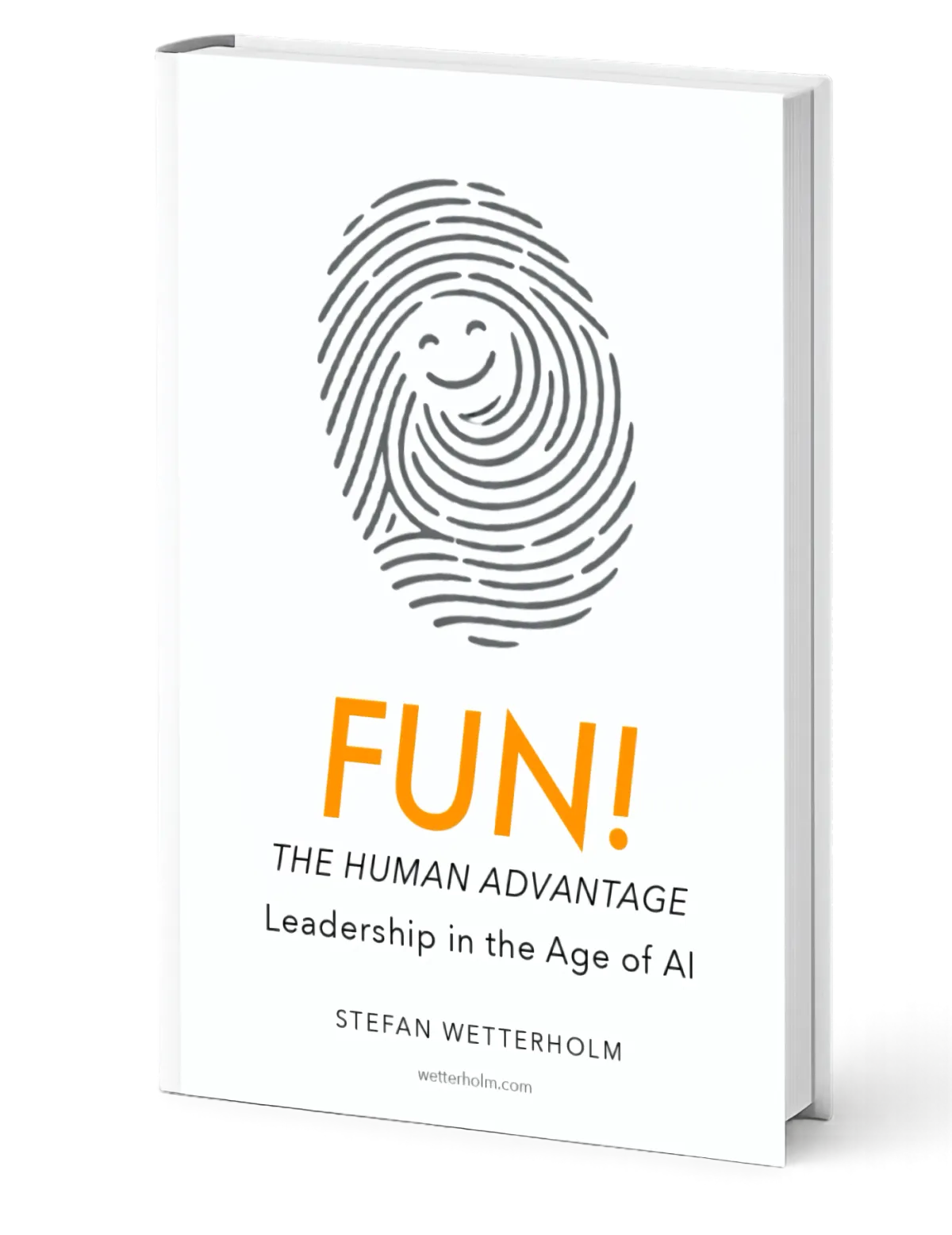
Excerpt from the book
The age of the centrifuge
Have you ever felt that life is spinning faster and faster,
and that the harder you run, the less energy you seem
to have?
Never before in human history have we been exposed to
such an enormous !ow of information.
With social media — and now with AI — the stream
continues to accelerate.
We no longer only follow what happens locally or
nationally. Every day we take part in global events.
We can instantly access expert knowledge from
anywhere in the world.
At the same time, technological development continues
at a speed never seen before.
And in the middle of all this, we are expected to perform
faster and faster.
Is this a threat — or an opportunity?
With the level of noise constantly increasing, how do we
find the signal and keep it clean?
A centrifuge can serve as a symbol for the paradigm we
live in.
A centrifuge spins in order to push clothes outward
against the walls of the drum, squeezing the water out of
them.
Sometimes I imagine myself running inside such a drum
— the centrifuge of life.
The drum spins so fast that I can barely keep track of
what is happening around me.
Emails arrive faster than they can be answered. New
messages, new projects, new expectations — before the
previous ones are finished.
With so much information and pressure, it becomes
difficult to focus. All my attention is required simply to
take the next step.
Eventually my focus is reduced to one thing:
Staying on my feet.
Surviving.
At best I manage to keep an eye on the people closest to
me and see how they manage to stay upright.
The faster the drum spins, the greater the pressure.
We do not feel very well.
But we tell ourselves:
“This is the reality we live in.”
One way to endure the situation is to live in the future.
We dream about succeeding with the next project — and
finally becoming free.
Another way is to live in the past. We dream about the
good old days.
Some people condemn technological development. Some
shout at the machine operator to turn the machine off.
They criticize the absurdity of running around trying to
keep balance.
Yet they keep running.
A whole industry of consultants offers expert advice on
how to think in order to stay on your feet.
Books are published where the most successful balance
artists explain their best tricks.
How they survived the latest increase in speed — with
new strategies, mass layoffs, mergers, or major
investments in technology.
The risk of staying near the outer wall is obvious.
At any moment we can fall.
And when we fall, we are immediately thrown against
the outer edge of the drum — where our life force is
squeezed out of us.
Some people who have fallen have been forced to find
another solution.
Others — while still standing — have already seen the
futility of the centrifuge and begun searching for new
answers.
Instead of trying to run faster, they began asking a
different question.
The alternative has so far been discovered by only a few.
Their solution is simple.
They move toward the center of the centrifuge.
At the center, the drum does not feel as fast.
There is time to see clearly. Time to feel what step needs
to be taken next.
Some even report that when they reach the very center,
the speed of the drum disappears entirely.
They say it was only an illusion.
From this place they feel free to move.
Free to create what they want.
Even together with those still running in the drum.
And they claim they are having great fun.
Our constant pursuit of time efficiency and short-term
productivity makes us run faster and faster.
As a result we lose connection with ourselves.
Our programmable minds take over — filled with news,
social media, trends, and information that may not even
matter in our lives.
Many people become ill.
Studies suggest that up to 70% of doctor visits today are
related to stress.
And the stress fuels the use of drugs, alcohol, and
violence — especially when old traumas are activated.
The only solution I can see is to begin exploring our
inner world.
When we slow down and become more mindful — more
centered — something changes.
We reconnect with our joy of living.
With our deeper purpose.
With our creativity.
With our unique talents.
We make a conscious choice to change the paradigm.
We begin cleaning our channels from noise.
We dive deeper into what we truly want to spend our
time on.
And we learn to recognize the signal — and use it to
move forward.
For me, this is fundamentally a leadership question.
What becomes possible if more of us move toward the
center of the centrifuge?
Which talents lie dormant within our organizations?
How do we access them?
How much creative energy can we release together?
And how will that in!uence the products and services
we create?
The question may not be how fast the drum spins.
The real question is where we choose to stand inside it.
Questions for You
• What is your experience of living in the centrifuge?
• What do you do to “endure the situation”?
• Have you noticed how the speed of the drum feels
different depending on how you feel?

Why I wrote this book
After years of working with leaders, teams, and creative thinkers, one thing became increasingly clear to me:
Clarity changes everything.
This book became a way to explore what makes us deeply human in a world increasingly shaped by noise, speed, and AI.
I hope it inspires you to think clearer, feel deeper, and do meaningful work.
Stefan Wetterholm
Excerpts From The Book
THE MANIFESTO
Why clarity is becoming our greatest human advantage
THE AGE OF THE CENTRIFUGE
Why modern life pulls us away from what matters most.
INSIDE THE BOOK
Explore the ideas, stories and chapters behind The Human Advantage.
© 2026 Stefan Wetterholm Privacy & Terms
Wetterholm.com
Less noise. Room to matter.
Connect